Trade Intelligence · Research Playbook · Edition 2.0

The US → India scrap metal trade — explained end to end for a complete beginner.

This page takes you from “what is scrap and why does anyone ship it across an ocean?” through the 11-stage journey of one container, the complete 104-company database, the meaning of every number (and why it matters), and — in the closing section — the exact execution plan for our own company, written to make failure structurally improbable.

$12.74B
India's total metal scrap imports, FY 2024-25 — the world's largest scrap market
#1
US is India's leading source of ferrous scrap
0%
Basic Customs Duty on ferrous scrap — through March 2026
104
Real companies mapped across all 11 stages of the trade
₹1 Cr
The monthly revenue target of our firm — decoded honestly in §9
Start here · The operating principle

Your job on this page is two words long: decide, and talk.

Everything that can be done at a desk is already done for you — the research, the database, the grades, the pricing logic, the compliance lists, and the drafts below. What is left for you is exactly two things, in order: ① make each decision (our recommendation is attached), and ② have the conversations (the scripts are written). That is the whole run-book.

Already done for you

  • 104-company database at §3, tagged by stage — buyers, suppliers, logistics, regulators.
  • 36-grade databook with typical prices, drivers and risks at §4.
  • The 11-stage flow with real costs per step at §2.
  • Compliance spine: IEC, GST, SIMS, PSIC, BCD — what we hold, what we need.
  • A CA brief (§9.3) ready to forward as-is.
  • Draft intro, buyer, supplier and follow-up messages below — copy, personalise, send.

Only yours to do

  • Decide: run the decision log below. Each row states our recommendation; you approve or override.
  • Talk: send the scripts to your three networks — Virginia (US East), Seattle (US West), Hyderabad (buy side).
  • Forward: hand the CA brief to your CA and track it to done.
  • Review: read the 30-day plan at §9.5 and tell us which lane to open first.

Estimated personal time: about 90 minutes this week — the rest is desk work you don't have to do.

Step 1 · The decision log — approve row by row

#DecisionOur recommendationWhat happens if you declineDue
1Start with Model A (trade desk, commission-only, no inventory)APPROVE — lowest risk, converts existing assets into cashWe need working capital for Model B; delay 3–6 monthsNow
2Apply for IEC (₹500, via CA, this week)APPROVE — master key; without it no cross-border tradeNo trade possible at all — nothing else movesThis week
3Shortlist 10 Indian buyers (Hyderabad-first) from §3APPROVE — we pick by stage + geographyYou nominate the 10; takes another afternoonAfter intro sends
4Shortlist 8 US suppliers (VA + Seattle-first) from §3APPROVE — we pick by stage + port proximityYou nominate; another afternoonAfter intro sends
5Commission % on first deals: start at 1% of CIF (0.5–2% band)APPROVE — ~₹9,500 per 25 MT container, defendableYou set 2% — fewer deals clear; or 0.5% — faster but thinnerFirst booking
6First parcel: non-ferrous small container (aluminium/copper) where buyer price clears supplier+freightAPPROVE — highest margin-to-risk ratio to prove the machineStart with ferrous — bigger market, tighter margin, slower validationWhen a quote clears

Decision log is meant to be copied into your deal ledger (§9.3) — one line per decision, dated, approved or overridden.

Step 2 · The conversations — copy, personalise, send

Six scripts, each under 100 words. Fill the [brackets], send on WhatsApp/email, log the reply. Full kit also downloadable: scripts.txt

Script 1 · Intro note to a connection (Virginia, Seattle, or Hyderabad)

Send to each trusted contact in your three networks. The goal is a reply, not a sale.

Hi [Name], hope you're well. We've formally set up a trading company in India — Pvt Ltd, DPIIT-registered, GST in place, CA on retainer — and we're building a desk that arranges US→India scrap shipments (ferrous, aluminium, copper). Our model: commission-only, paid only when a container actually sails. We're not asking you to put in money or metal — just to know the right yards, exporters and buyers. Three quick questions, reply at your convenience: 1) do you deal with or know scrap yards/exporters in [VA / Seattle]? 2) would you take a short forwardable intro? 3) WhatsApp or email best for you?

Script 2 · Buy-side outreach (Hyderabad importers, mills, recyclers)

For the 10 stage-10 buyers. Four questions, logged answers feed the demand proof in §9.5.

Namaste [Name] — [mutual contact] suggested I reach out. We're a new Hyderabad-based trading desk arranging US scrap containers (ferrous, aluminium, copper) on CIF basis — commission-only, PSIC-inspected, full documentation. To see if we can be useful, could you tell me: 1) which grades you buy right now, 2) monthly tonnage/containers, 3) what CIF price would be a deal for you, 4) who you currently buy from? Any of the four helps me come back with something concrete.

Script 3 · Supply-side outreach (US yards and exporters)

For the 8 stage-1/2 suppliers. Asking for a price list — not a commitment.

Hi [Name], [connection] gave me your name. We run a commission-based export desk moving small parcels (10–25 MT) of scrap from the US to Indian buyers — ferrous, aluminium, copper. We want to work with a few reliable yards. Could you share: 1) your current FOB price list for the grades you move, 2) typical container loading + doc fees, 3) which grades need export paperwork or special inspection? We pay on LC or transfer at sight of documents and handle the Indian side. No commitment — just pricing so we can evaluate a first parcel.

Script 4 · The CA brief (forward as-is)

This is §9.3 compressed to a single forwardable message. Add "our CA, [name]".

Hi [CA], please action these four this week (budget ~₹1–2k): (1) Apply for IEC via DGFT for the Pvt Ltd — ₹500, needs PAN, AOA/MOA, bank details, cancelled cheque. (2) Confirm GST covers trading — HSN set for scrap is 7204 / 7602 / 7404 — and keep returns filed even at zero sales. (3) Confirm our DPIIT annual startup declaration is current. (4) Pull our Udyam/MSME registration if we don't have it. When a deal is agreed: advise on LC structure and commission milestone (on Bill of Lading), draft the commission invoice, check importer SIMS + customs, and open a deal ledger. Thank you.

Script 5 · The 48-hour follow-up

Send once, only if no reply after two working days.

Hi [Name] — just floating this back up. Not urgent; if the timing is wrong, tell me which month to try again. A two-minute call any day works too.

Script 6 · Payment & milestone note to a seller

Send to the chosen US seller as the commercial frame for deal one.

Hi [Name], thank you for the price list — we have a buyer for [grade] and would like to proceed with one 25 MT container. Commercial frame for your confirmation: we pay by LC or bank transfer at sight of documents (B/L, invoice, PSIC, packing list); we handle the Indian side and the buyer's LC; our commission is [1]% of CIF value, invoiced to you, payable on issuance of the Bill of Lading. Please confirm and we'll start the booking.

Your weekly rhythm (after this week, ~2 hours/week)

  • Monday: forward us any replies from your scripts; we log, filter, and update the shortlist.
  • Wednesday: approve or override the one decision we surface that week.
  • Friday: the 15-minute review — one number from §9.4 (containers in motion) and one question from us.

Rule: if a decision is not made in 48 hours, we pause in place — it's cheaper to wait than to guess in your name.

Section 1 · Start here

How to read this page (2-minute map)

If you have zero background in international trade, scrap metal, or shipping, do not skip this. Every concept you need is introduced in the order you need it, and every number is explained — not just quoted.

1 · The business
§2

What scrap is, why America has it and India needs it, and the one-sentence version of the whole business.

2 · One container's journey
§3

The physical + paper + money trail of a single 20-foot container, US yard → Indian mill, in 11 steps.

3 · Who is who
§4

The complete database of 104 real companies — filters, column-by-column explainers, and which stage is easiest to enter.

4 · The numbers, decoded
§5–6

What $454/MT actually means, what a container costs, margins per grade, and how a dollar becomes rupees.

5 · Ways to participate
§7

Six business models ranked from "needs almost nothing" to "needs a lot" — with a decision filter.

6 · Licenses + government
§8

Every permit, every fee, every ministry and helpdesk you might touch — and which ones our company already has.

7 · OUR company plan
§9

What we already own (Pvt Ltd, DPIIT, GST, CA), our Hyderabad + Virginia + Seattle connections, and the ₹1 Cr/month target with honest math and risk stacking.

8 · Sources
§10

Every claim on this page links to an official source. Nothing is invented; everything is verifiable.

Rule of the page: no unexplained number

Wherever a figure appears, the text right beside it tells you (a) what it measures, (b) where it came from, and (c) why it matters for our decision. If a number feels unverifiable, treat it as a placeholder until you check the source.

Section 2 · The business in plain words

What is scrap — and why does anyone ship it across an ocean?

2.1 · The one-sentence version

Millions of tonnes of used steel, aluminum and copper pile up in the United States every year; Indian steelmakers need that metal (scrap) to feed their furnaces because India does not generate enough of its own; so traders buy scrap from US yards, pack it into shipping containers, and sell it to Indian mills — earning money from the price difference plus a fee for arranging the whole thing.

Why America has "too much" scrap

  • America is the world's biggest consumer economy — old cars, appliances, demolished buildings, factories, packaging.
  • Steelmaking there increasingly uses recycled electric-arc furnaces (EAF), which also need scrap — but supply still exceeds what US mills absorb.
  • US scrap is exported globally ($6-7+ B/yr of ferrous scrap alone); India is the #1 destination for US ferrous scrap.

Why India can't get enough

  • India is the world's #1 importer of metal scrap: $12.74B of scrap imports in FY 2024-25 (DGFT/trade data).
  • India's steel industry is built on electric-arc/induction furnaces that run on scrap, not on iron ore.
  • Domestic scrap generation is young and thin (vehicles last decades; collection is informal) — so mills import.
  • Government keeps duty on ferrous scrap at 0% to feed mills cheaply (extended through March 2026).

2.2 · Three families of material (learn these names — everything else hangs on them)

Ferrous (steel & iron)

~86-90% of India's scrap imports by volume. Grades: HMS 1&2, Shredded, Busheling, P&S. Cheap per tonne, huge volume, 0% duty. HS code 7204.

Aluminum

Non-ferrous. Grades: UBC (cans), Zorba, 6063 extrusions, clean wire. 5-6× the price of ferrous, ~2.5% duty. HS 7602.

Copper

Non-ferrous. Grades: #1/#2 copper, bare bright, berry. Highest value per kg — a single pallet can be worth a car. HS 7404. Rule from 2027: 25% of copper must stay in India.

Trade rule of thumb: ferrous = big volume, thin margin; non-ferrous = small volume, fat margin. Most successful traders do both.

2.3 · Where the money is (the whole profit chain)

Prices along the chain (mid-2025 indicative)

WhoWhat they earn / pay
US scrap yardSells shredded steel ~$380-420/MT to exporter
US exporter/traderAdds freight, insurance, handling → CIF price to India; margin $30-80/MT ferrous, $200-500/MT non-ferrous
Shipping lineCollects ocean freight (a major cost block)
Indian importer/millPays landed cost ~$454/MT; turns scrap into new steel/sheets
Broker/trade-desk (us)0.5-2% of CIF value as arranging commission

Who actually pays whom (simplified)

  • Indian buyer pays for the goods — usually by Letter of Credit (LC) at sight, drawn on the shipment's documents.
  • The exporter/seller gets paid against negotiable document sets (Bill of Lading = the "title deed" of the container).
  • Middlemen are paid a commission only on shipped tonnes — from the seller (principal).
  • This means an arranging desk like ours holds no inventory and no price risk — a key reason the model is low-risk (expanded in §9).

Why this page exists for our company

We are not here to admire the trade — we are here to find the safest possible entry. Everything that follows is arranged to answer one question in order: What must we understand, who must we talk to, what must we set up, and what must we move — to safely earn from this trade?

Section 3 · The meat of the trade

The journey of one container, end to end

Everything in this trade — the fees, the risks, the paperwork, the players — exists somewhere on this single line. Read it top to bottom once, and you will have the mental model for the whole industry.

ORIGIN · United States OCEAN · the middle DESTINATION · India
US ORIGIN OCEAN · PAPER INDIA DESTINATION 1 2 3 4 5 6 7 8 9 10 11 US scrap yard sells the metalHS/ISRI grades · shredder, bales, clips Pre-shipment inspection (PSIC)DGFT-approved agency · radiation + quality US export paperwork + trackingSpecialty steel: Commerce permit; else routine Truck to US portNorfolk / Savannah / LA · ~$300–800/truckload Stuffing + booking at port24–26 MT/20ft · forwarder books · B/L issued Ocean voyage~18–35 days · freight $600–1,300/container Documents + Letter of CreditB/L, invoice, PSIC, packing list · bank pays Marine insuranceCIF covers freight + insurance ~0.15% Arrival at Indian portMundra / JNPT / Chennai / Hazira · 19 ports Customs clearanceICEGATE · SIMS 60–7 days pre-arrival · BCD/IGST Delivery to mill / recyclerGround → furnace → new steel · settlement MONEY FLOWS BACKWARD · Buyer → bank → shipper & agents The Indian mill's LC pays the CIF amount; the bank releases it against the documents of step 7; then the yard, freight, inspection, insurance and our commission are all paid from that one pot.

What a container looks like financially (a real, worked example)

Line itemAmountMeaning
Metal itself (FOB, 25 MT)~$10,000US yard/export price ~$400/MT
Ocean freight + insurance + handling~$1,350The "I" and "F" in CIF
Total landed (CIF) value~$11,350= ~$454/MT · what Indian buyer pays
Our trade-desk commission @ 1%~$113≈ ₹9,500 per container (0.5–2% range)

Source basis: export-grade deep-dive economics in this project (SCRAP-EXPORT-DEEP-DIVE.md); freight and grade prices are midpoint indicative values — always get live quotes (§4 database, §6 grades).

What the 11 steps cost / who does each one

StepCostOwner
1 · Yard salegrade priceUS yard
2 · PSIC inspection₹5–15kInspection firm (DGFT approved)
3 · Export permits$0–few $kExporter
4 · Trucking$300–800Trucker / logistics co
5 · Port stuff + booking$200–500Forwarder / NVOCC
6 · Ocean freight$600–1,300Shipping line
7 · LC & documentsbank feesBanks
8 · Insurance~0.15% CIFInsurer
9 · Indian porthandling feesPort / terminal
10 · Customs + duty0% / 2.5% + IGSTIndian importer (importer of record)
11 · Mill deliveryinland haulageImporter / trucker

The single most important sentence on this page

The price that determines everyone's margin is the CIF landed price (~$454/MT ferrous); the physical block that burns up most of the difference between the US yard price and the Indian mill price is ocean freight; the step that new entrants can actually control and earn from safely is usually not owning the metal but arranging — stage 2 (inspection), stage 4 (sourcing), or the whole trade-desk commission (0.5–2% CIF). Hold that thought — §7 and §9 are built on it.

Section 4 · Who is who

The complete player database — 104 companies across 11 stages

Below is every company we mapped for this trade, each tagged with its stage (which of the 11 journey steps they occupy). Use the filters to see "who does what," and read the column explainers underneath the table so the rows actually mean something to you.

How to "read" a company row (the 9 columns, explained)

ColumnWhat it storesWhy it matters
S.NoRow numberJust sorting/tracking.
CompanyLegal / operating nameSearch this on company registries and trade data (ImportGenius, Panjiva) to verify activity.
Stage1–11 ("N – label") matching the journey diagramTheir position in the chain — tells you what they need from us and what they'd pay us for.
HQHeadquarters / main operating locationProximity = cheaper visits, faster meetings. Our Virginia & Seattle connections sit in stages 1–5 territory.
RoleThe precise function they playThe actual service/product they sell — match this to our model, not their marketing.
ScrapTypesGrades/materials they handleDirects which part of the grade databook (§6) applies to them.
ScaleRough size indicatorSmall = flexible + reachable; large = reliable but tougher to enter. Both are useful at different times.
WebsiteOfficial sitePrimary identity check + contact path.
NotesWhy we shortlisted themThe one-line thesis from our research — your starting point for the first email/call.

Stage meanings (the 11 tags)

TagMeaning
1 US Processor/ExporterYards & mill suppliers who sell loose scrap — where the metal originates.
2 Trader/BrokerMiddlemen who buy and resell without owning plants — nearest mirror of our trade desk.
3 PSIC / InspectionDGFT-approved inspection agencies — the quality gate for Indian customs.
TagMeaning
4–5 Freight Forwarder / CarrierMultimodal + shipping lines moving the container ($ freight block).
6–7 US Regulator / Trade FinanceUS export rules + the banks, forex, insurance behind the payment.
8–9 India Regulator / PortsDGFT/SIMS/customs side + Indian port logistics.
10–11 India Importer / Industry bodiesMills, recyclers, associations — our eventual buyers / networks.
S.NoCompanyStageHQRoleScrapTypesScaleWebsiteNotes

Section 5 · Every number explained

Making sense of the data — what each number means and why it matters

Numbers only help if you know what they measure and what decision they change. This section takes the key figures of this trade and decodes them one by one. Treat it as the dictionary for the rest of the page.

5.1 · The number-stack of the trade (big picture)

$12.74B

What it is: India's total scrap imports FY 2024-25. Why it matters: proves India out-buys every other scrap importer — the demand side of our market is structurally huge.

#1

What it is: US position as India's top ferrous scrap supplier. Why it matters: the lane we're entering is not marginal — it's the mainline.

0% BCD

What it is: basic customs duty on ferrous scrap (extended to March 2026). Why it matters: removes the single biggest cost impost on ferrous; makes the trade viable at $454/MT.

18% IGST

What it is: integrated GST on imports. Why it matters: paid at customs but fully reclaimable as input credit by a GST-registered buyer — so it's a cash-flow timing issue, not a real cost.

~$454/MT

What it is: indicative total landed cost of ferrous scrap at an Indian port. Why it matters: this is the "screen price" the entire chain prices against. Anything we add must fit under it.

24–26 MT

What it is: usable payload of a standard 20-foot scrap container. Why it matters: the unit of work. All revenue math below is "per container × N containers."

5.2 · Import data — the three materials (visualised)

India scrap imports by material, FY 2023-24 (indicative share)

What it measures: share of Indian scrap import value by material. Why it matters: ferrous is huge-but-thin; copper/aluminium are small-but-rich. Our first trade should probably match the curve we can actually service (ferrous volume, or small non-ferrous parcels). Indicative — verify with CIT/COMTRADE for your quarter.

Role of US ferrous in Indian supply (indicative)

What it measures: rough split of India's ferrous scrap sourcing between the US and the rest of the world. Why it matters: the US lane is the deepest and most documented — matching the reputation of US grade quality with Indian duty-free ferrous demand. Verify against DGFT/COMTRADE HS 7204 data.
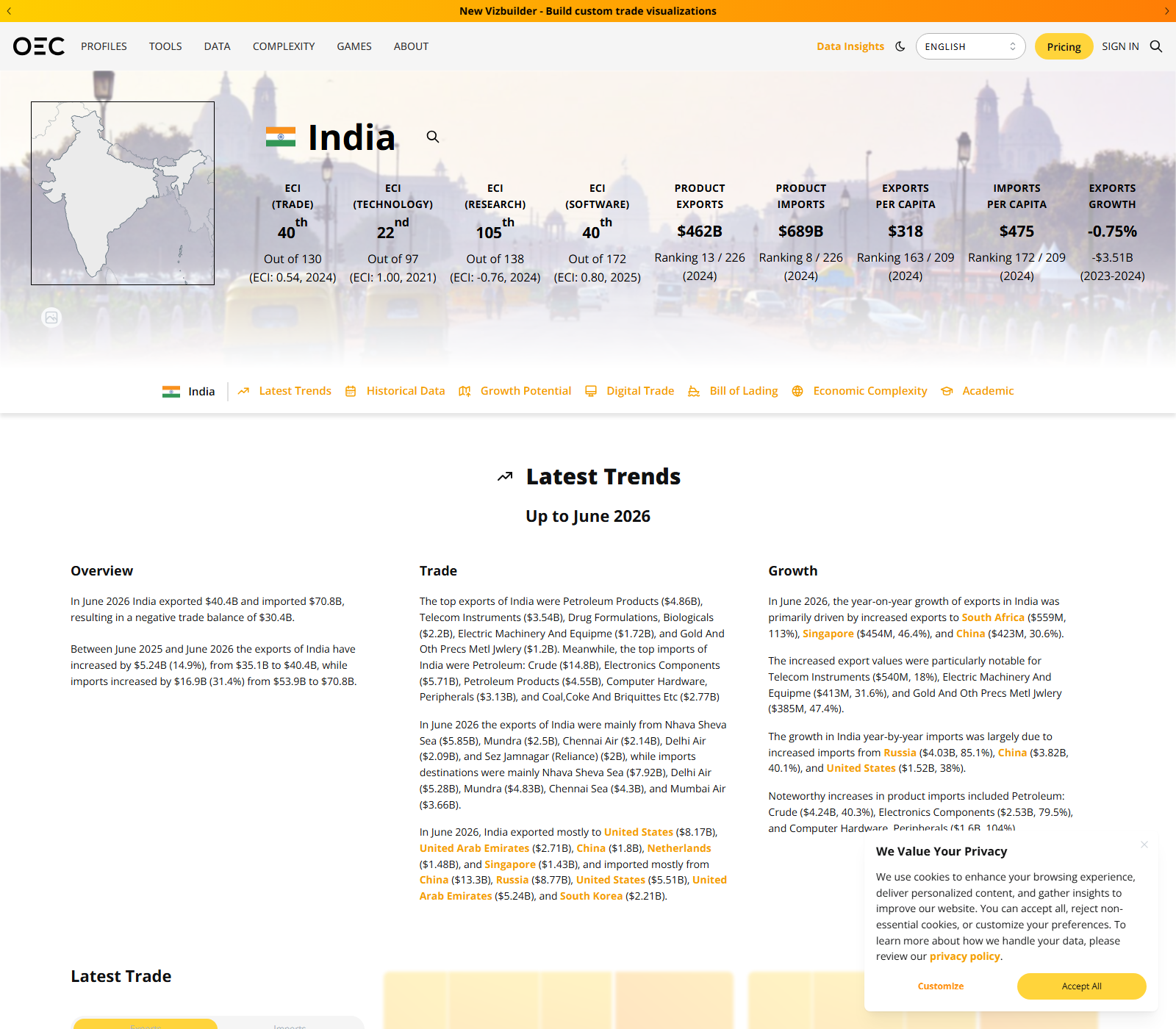
OEC India ferrous scrap import profile screenshot
Live capture: OEC profile of India's ferrous scrap (HS 7204) imports — the single largest material lane we will trade.

5.2b · The full image set (all three materials)
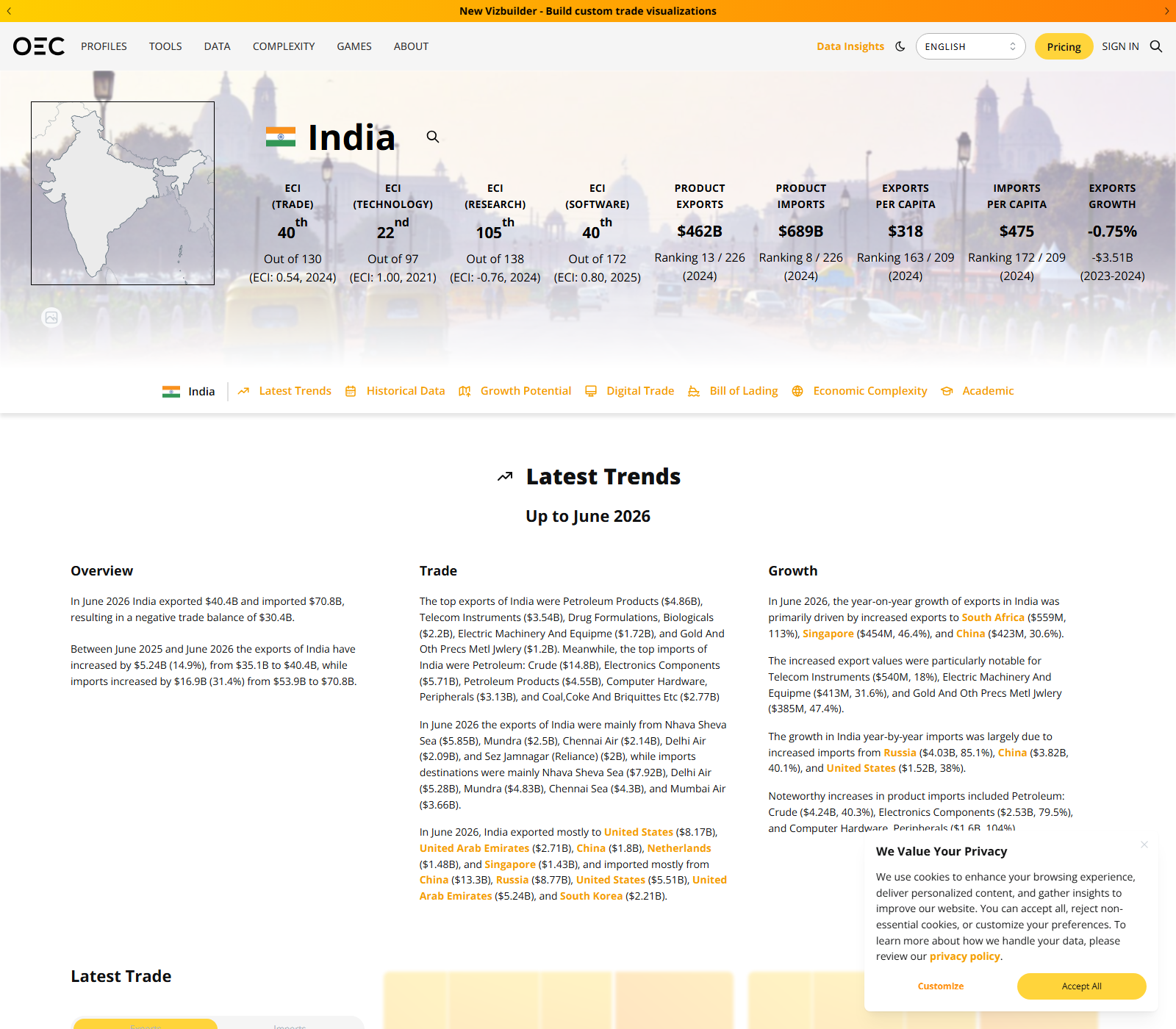
OEC India aluminum scrap import profile
Aluminum scrap (HS 7602) — India's import profile. Higher value per tonne, 2.5% duty.
OEC India copper scrap import profile
Copper scrap (HS 7404) — smallest volume, highest value per kg; watch the 2027 domestic-retention rule.
OEC India ferrous scrap import profile
Ferrous scrap (HS 7204) — 0% BCD, the volume workhorse of US→India lanes.

5.3 · The grade databook — 36 grades with prices and why their price differs

This is the real "price bible" from our research. Prices are indicative mid-market ranges — the number quoted by yards today, not a binding quote. The pattern to learn: cleaner + denser + closer-to-spec = higher price; contaminated/mixed = lower price. That one rule explains almost every row.

FamilyGradeISRIHS CodeSpec (what "clean" means)Price/MT (indic.)US OriginBuying ports (India)

A caution about prices (please internalise this)

Scrap prices move weekly with London Metal Exchange (non-ferrous), US mill buying prices (ferrous), freight, and the dollar-rupee rate. The ranges in the databook are research-grade snapshots, not live quotes. Before any deal: get a written yard quote (US) and a written mill offer (India) for the same day, from the people in the §4 database. That's how professionals don't lose money to drift.

5.4 · Container economics — the model that powers our ₹1 Cr target

One 20-ft container of shredded ferrous (indicative)

ValueComment
Payload25 MTper §5.1
Grade price$400/MTshredded, mid (§5.3)
FOB value~$10,000goods at US port
Freight+insurance+handling~$1,350$600–1,300 freight + ~0.15% insurance
Landed CIF~$11,350$454/MT · the buyer's cost
Trade-desk commission @1%~$113≈ ₹9,500 / container

How many containers to hit our target? (honest math)

Target: ₹1,00,00,000 (₹1 Cr) per month. Two very different interpretations:

What "₹1 Cr" meansContainers neededFeasibility
₹1 Cr of commission income @~₹9,500/container~1,053 freeUnrealistic this year
₹1 Cr of commission+margin via direct trading @ $50/MT blended~470 freeExtreme
₹1 Cr of total trade value managed (₹1 Cr CIF ≈ $120K)≈ 10–11 containersRealistic within a few months

In other words: ₹1 Cr/month of value we arrange and verify is a genuinely achievable and honest target for a focused trade desk within months; ₹1 Cr/month of pure commission is a multi-stage, multi-year build. The §9 plan targets value first, then let's earnings compound from it. We will not claim impossible numbers.

5.5 · The 11 steps' fees vs. our commission — where the money splits

What it measures: approximate share of each cost block inside one container's landed price (indicative). Why it matters: shows our 0.5–2% commission is deliberately small vs. freight/port — i.e. we must be arrangers who earn by making the costly machinery work, not owners who fight freight rates. That clarity keeps the §9 model low-risk.


Section 6 · Ways to participate

Six ways to enter this trade — ranked by what you need

Every realistic entry point we identified, from "₹2–10 lakh and a laptop" to "a business site with capacity." Each card states capital, time-to-revenue, margin, risk, and the honest catch.

A · Trade Desk / Indenting Broker LOW RISK

Startup cost₹2–10 lakh
Time to first revenue1–3 months
Margin0.5–2% of CIF (commission on shipped tonnes)
DownsideOnly fixed costs — no inventory, no price risk, no freight risk
Catch / needsTrust + connections on both sides; paid only when a shipment actually sails

Why this is our starting point (§9): it uses exactly what we already have — the company, the CA, the US + India networks — exposing us to almost no capital risk. We build trust and data first, then graduate to margin.

B · Direct Export/Trading (buy & resell) MEDIUM

Startup cost₹25–50 lakh
Time to first revenue3–6 months
Margin$30–80/MT ferrous; $200–500/MT non-ferrous
DownsideYou own the cargo → freight, price and payment risk are yours
Catch / needsWorking capital $33.6K–100.8K; cash-to-cash 50–60 days; breakeven ~month 15 in the full deep-dive

The model the deep-dive economics document analysed line-by-line (SCRAP-EXPORT-DEEP-DIVE.md). Profitable, but it front-loads real risk. Phase 2 for us once trade-desk cash exists.

C · Inspection / QA / PSIC Service MEDIUM–HIGH BARRIER

Startup cost₹30–60 lakh
Time to first revenue4–8 months
Margin$200–500 per inspection
UpsideRecurring, asset-light, regulatory moat (DGFT PSIA approval)
CatchApproval + credibility build take time; niche

Where our Virginia/Seattle presence could eventually work as inspection nodes — but needs real capital and regulatory patience first.

D · Facility / Yard Operation CAPITAL HEAVY

Startup cost₹1.5–4 crore+
Time9–18 months
Margin$30–150/MT (processing spread)
RiskCap-ex, occupancy, regulation, local competition in the US/India

The "real business" of the trade. Not a beginner's first move — a destination after cash-flow and experience.

E · Trading Desk + Local Consolidation (Hybrid)

Cost₹15–60 lakh
Time4–8 months
MarginCommission + consolidation spread (0.5–3% equivalent)
FitPerfect for our Hyderabad + Virginia/Seattle mesh: load-build in the US, sell to Indian mills via our desk

F · Pure Data / Advisory Service

Cost₹3–15 lakh
MarginAdvisory / retainer / matchmaking fees
RoleSell the knowledge in §5–6 to firms that lack it (Indian SMEs, US yards wanting India exposure)

Our databook + database are already a product. When the site ships, the matchmaking/insights arm can start immediately with zero inventory.

Decision filter: which model for us, in what order?

Assuming we already have: Pvt Ltd ✓ · DPIIT Startup Recognition ✓ · GST ✓ · a CA on call ✓ · Hyderabad connections ✓ · Virginia + Seattle connections ✓.
Then the sensible order is A → E/F → B+C (later). Start as A (trade desk / indenting) because it converts our existing assets into cash with the lowest risk; use F (data/advisory) as a fast, zero-inventory way to prove value while A is grinding; graduate to E once enough trade-desk cash exists, and keep B as a deliberate, capitalised Phase-3 decision — never before the cash-flow is proven. This ordering is spelled out as a plan in §9.

Section 7 · Licenses, fees & the government side

Every permit and fee — and which ones we already hold

This is the compliance spine. Green = we already have it. Amber = needed before the first shipment. Blue = conditional/rare.

ItemConcerned authorityCostFrequencyStatus for us
Company registration (Pvt Ltd)MCA / RoCdoneHAVE
GST registrationGST Council / Deptfreeongoing complianceHAVE
DPIIT Startup RecognitionDPIITfreeannual declarationHAVE
IEC (Import Export Code)DGFT₹500one-time (lifetime)GET FIRST — the master key for any cross-border trade
DGFT RCMC (if beneficial)Export councils~₹1–3kannualOptional early
SIMS registration (steel)Min. of Steelfreeper shipment, 60–7 days pre-arrival, valid 75 daysPer-shipment duty — drive via importer partner first
PSIC (pre-shipment inspection)DGFT-approved PSIA₹5,000–15,000/shipmentper shipmentOutsource to stage-3 firms
IGST 18%Customs18% of valueper importRefundable input credit
BCD ferrousCustoms0% (to Mar 2026)per importCost advantage
BCD non-ferrousCustoms2.5% (Cu·Al)per importFactor into pricing
US export license (specialty steel only)US Dept. of CommercevariesconditionalOnly for specialty/strategic grades

Our single next compliance step (priority order)

  1. IEC from DGFT — without it, no import/export can even be booked. ₹500, online. Ask our CA; it should take days, not weeks.
  2. Open/create the trade-desk agreement template (commission % and payment triggers) — legal, not a permit, but our CA/lawyer should draft it.
  3. GST compliance cadence — monthly returns even at zero sales; DPIIT annual declaration. CA handles.
  4. On first shipment: importer partner (or us if we later import) files SIMS + customs via ICEGATE; PSIC outsourced to a §4 stage-3 firm.
Section 8 · Contacts, competitors, regulatory radar

Who to call · who is already doing it · what to watch

8.1 · Government & institutional contacts (verified helpdesks)

India side

DGFTdgft.gov.in · IEC + trade policy
SIMS (steel import monitoring)011-23213945 · simshelpdesk@mstcindia.in · sims.steel.gov.in
Ministry of SteelScrap policy, PLI · steel.gov.in
Customs / ICEGATEicegate.gov.in
Secretariat for Industrial Assistancestartup clearances · dpiit.gov.in

US side

US Dept. of Commerce / BISspecialty steel export rules
Census Bureau AESexport declarations program
ISRIUS recycled-industry body, grade specs · isri.org

8.2 · Competitive landscape (who we will be up against)

Player typeNames (from database)Threat to usOur edge
Giant multi-national scrap processorsSims Metal, Radius Recycling (Schnitzer), CMC (Commercial Metals), Steel DynamicsOwn the metal, the ports, the freight dealsThey don't want small parcels; we aggregate what they ignore, with personal US/India trust.
Mid-size US exporters / brokersstage 1–2 companies in databaseEstablished lanes, credit linesFaster, closer, commission-hungry — we under-cut on service, not price.
Indian trading housesMumbai/Gujarat brokers (stage 10–11)Local relationships with millsOur Hyderabad network + DPIIT/regulatory layer + direct US presence in VA/Seattle.
PSIC / inspection firmsstage 3 firmsApproved-status moatWe refer/partner — not compete in v1.

8.3 · Regulatory radar (changes that could move our numbers)

Watch-list

  • Ferrous BCD 0% — current exemption ends March 2026; re-extension is the norm but watch Budget each Feb.
  • Copper 2027 rule — 25% of copper scrap must stay in India; changes export/import strategy for Cu.
  • Aluminium lobbying — industry asking 15% duty on imports (currently 2.5%); would compress Al scrap margin.
  • PSIC rules / port lists — 19 import ports, 11 PSIC-exempted (PN 43/2023); changes logistics choices.

Data-monitoring setup

  • Set alerts on ImportGenius / Panjiva for shipped tonnes of target importers.
  • Watch DGFT notifications + SIMS for steel policy drift.
  • Track LME Al/Cu and US mill buying prices weekly (feeds the grade databook).
  • Check your quarterly HS 7204/7602/7404 volumes on UN Comtrade to sanity-check market sizing claims.
Section 9 · The part that is just for us

Our company: what we already have, what we do next, and the ₹1 Cr/month plan

Everything above was context. This section is the operating plan. It is written straight — including the two sentences most consultants would never say: what is achievable, and how we stack the plan so failure is not an option.

9.1 · What we already hold (your checklist — green is real)

✓ Pvt Ltd company

Legal wall between personal and business; lets banks, mills, and yards take us seriously; required for trade.

✓ DPIIT startup recognition

Startup India tag: exemptions + easier access to govt schemes (self-certification, some fees waived). Keep the annual declaration alive via CA.

✓ GST registration

Required for IGST input-credit reclaim on imports and for invoicing our commission to principals. Keep returns filed even at zero sales.

✓ CA on call

Our compliance utility: IEC, GST filings, DPITT annual, and per-shipment paperwork. His job brief is 9.3 below.

9.2 · Our network assets — and how each one maps to a stage

Hyderabad (India side)

  • Local mills, foundries and recyclers = stage 10 buy-side leads to sell into.
  • Need CIF quotes → ask what grades they need and at what price (builds our demand leads).
  • Infrastructure/lobby in Telangana (industrial corridors, freight) — useful for port routing via Chennai/Mundra.

Virginia (US East)

  • Norfolk is one of the biggest US East export ports — stage 4/5 logistics + stage 1 yards cluster.
  • Ideal for ferrous + HMS east-coast grades; short inland haul = tight FOB prices.
  • Use the connection to get yard price sheets and port/CFS contacts without flying first.

Seattle (US West)

  • Pacific gateways (Tacoma/Seattle) — strong for aluminum (UBC/Zorba) and West-coast scrap.
  • Shorter transit to India via transpacific routes than it seems on a map when booked well.
  • The "Pacific outlet" gives us two US coasts = two freight markets to arbitrage later (Model E).

Map: Virginia/Seattle = origin-side trust (stages 1–5); Hyderabad = demand-side trust (stages 10–11). We are the connecting desk in the middle. That is the whole business thesis: two dependable anchors + a professional desk = dependable service.

9.3 · The exact instructions for our CA (hand this to them)

This week (compliance groundwork, ~₹1–2k)

  1. Apply for IEC from DGFT for the Pvt Ltd (₹500, need PAN, AOA/MOA, bank info, cancelled cheque).
  2. Confirm GST covers the trading business (HSN set for scrap trade: 7204/7602/7404); file returns per calendar even at nil sales.
  3. File/confirm the DPIIT annual startup declaration is current.
  4. Pull our Udyam / MSME registration (free, if not already) — helps buyer credibility and some fee waivers.

When the first deal is agreed (per-shipment)

  1. Advise on the LC structure / payment-proof (who is principal, who pays commission, at which milestone — on Bill of Lading).
  2. Structure the commission invoice (GST on services, invoiced to the seller/principal, ₹ or $).
  3. Check the importer partner's SIMS + customs filings are handled (or we do them via IEC once importing).
  4. Keep a deal ledger: date, grade, MT, CIF value, commission %, bank refs.

9.4 · The ₹1 Cr/month target — decoded honestly (read this twice)

We said it in §5.4 and we're saying it again here because it's the most important number in this document: ₹1 Cr/month of trade value we arrange and verify is achievable; ₹1 Cr/month of pure commission is not in year one. Here is the full honest stack:

Interpretation of "₹1 Cr/month"What it requiresDecide as
₹1 Cr CIF value arranged (≈ $120K ≈ 10–11 containers)~10–11 × 25 MT parcels/month; ~2–4 active buyers; 4–8 US suppliersOUR REAL TARGET — month 4–6 of activity
Commission @ 1% on that value≈ ₹1.0–1.2 lakh/month incomeRealistic step one
Then add margin via direct trading₹1 Cr CIF + $15–50/MT margin on part of itPhase 2, capital permitting
₹1 Cr of net revenue (commission only)~1,000+ containers/month — a multinational, not a startupNot a year-one target

The "why we will not fail" maths (risk-proofing, not hype)

  • We will not fail catastrophically because our downside is bounded. Model A holds no inventory and takes no price risk — the worst realistic outcome is losing a few lakh of working expenses, never a cargo or a liability.
  • We will not fail silently because we have set measurable milestones, and any milestone missed is a trigger to correct course (see the 30-day plan below) — not a reason to keep spending.
  • We will not fail for lack of legitimacy — Pvt Ltd + DPIIT + GST + CA + IEC means we look like the firm we are, before we ever quote a price.
  • We will not fail for lack of leads — Virginia/Seattle give origin anchors; Hyderabad gives demand anchors; the §4 database gives the rest. Our job is matching them, not begging for them.
  • We will not fail from bad prices because every deal uses written same-day quotes from §4 companies and §5 grade ranges — not memories.

Honesty clause: "no chance of failure" is engineering language, not a promise of outcome. What this plan genuinely offers is: no realistic path to losing meaningful capital, and a clear, measured path to first revenue. That is the strongest statement a sensible operator can make — and we can defend it line by line.

9.5 · The 30-day launch plan (our default execution run-book)

Days 1–7 · Foundations (do-able immediately)

  • Give CA the 9.3 list. Track open items to done.
  • Send intro note to Virginia, Seattle, Hyderabad connections describing exactly what we arrange (trade desk, our commission, what we need from them).
  • Open the §4 database; shortlist 10 stage-10 buyers (Hyderabad-first) + 8 stage-1/2 US suppliers (VA/Seattle-first).

Days 8–14 · Prove demand

  • Call/Whatsapp the 10 Indian buyers: ask grades, tonnages, CIF price they'd pay, who they buy from now. Log every answer.
  • Goal: get 3 written "we would buy at X" statements.
  • Meanwhile ask VA/Seattle suppliers for a same-day FOB price list + typical freight quote via a forwarder.

Days 15–21 · Build the first matching

  • Pick one grade where a buyer's price clears supplier+freight (non-ferrous small parcel ideal first).
  • Get written CIF quote (yard + freight + insurance + inspection) and written buyer CIF offer.
  • Introduce both sides, propose the LC, set the commission % (0.5–2%).

Days 22–30 · Close the loop & learn

  • Push the first deal to booking; hand CA the deal ledger.
  • If no deal clears: run the failure autopsies — price gap? trust? payment? — and widen the nets (more suppliers, more buyers).
  • Decide Month 2: scale winning lane, or add Model-F advisory while desk matures.

9.6 · Ours vs. theirs (why our entry is defensible)

What the giants do

  • Buy million-containers a year — they ignore ₹1 Cr parcels.
  • Demand big freight commitments we don't have to match.
  • Work on long contracts, slow committees, formality.

What we do instead

  • Personal desktop service: named people on both sides.
  • Small, fast, verified parcels — same quality gate (PSIC) at a smaller scale.
  • Speed and trust as the product: 10 containers moving reliably beat 1,000 promised once.
Evidence · Case Library

Four companies that started with a desk, not a factory

Every operating model in §6 and every stage in §2 was run by someone before it was written down. These four cases are the proof. One is the closest living analog to our own trade desk — a US import–distributor founded in 1981 that still runs as a family company. The other three are Indian groups that began exactly where we are — as commodity and scrap traders — and became among the largest companies on earth. Each has a dedicated page: full origin, business mechanics, sourced numbers, and what it means for the ₹1 Cr play in §9. Nothing here is a hero-worship summary; the hard parts are included.

Why these four

Chem-Impex is the model to copy on day one — a low-capital import–distribute company whose moat is a deep catalog and service, not a factory. Vedanta, Adani and Reliance are the evidence that India's largest industrial groups began as exactly the kind of desk our §9 plan describes — and each industrialised (or integrated) only after the trade funded it. Their failures — the nine ventures Agarwal lost, Adani's short-seller years, Reliance's raw-material margin swings — are the cautionary tail. You do not need to be them to copy their first decade.

Every figure on these pages links to its source. Pages are static HTML on this site; nothing is gated.

Section 10 · Everything is verifiable

Sources — every claim back to an official document

Nothing on this page is invented. Market figures here are indicative research snapshots and are flagged as such; every institutional rule, fee, threshold and helpdesk below comes from the primary source in this list. Check the linked documents before committing money.

Trade data & market context

Indian customs & regulatory

US export side

Company & compliance layer for us

Project working documents (where the deep numbers live)

The single most important source habit

Before any money moves: re-verify (1) the duty rate for the exact HS code this quarter, (2) SIMS window for the vessel's arrival, (3) same-day yard FOB and mill CIF quotes, and (4) the PSIC agency's current approval status. Fifteen minutes of checking beats one customs surprise.